The best overall tea for a sore throat is honey-lemon tea. It is easy, soothing, and backed by evidence for comfort. But the right choice can depend on your main symptom: try ginger for pain and swelling, licorice or marshmallow root for a scratchy throat, chamomile to help with sleep, and peppermint if congestion is bothering you.
The main thing to know: start with honey-lemon tea. Match other teas to your most annoying symptom, and remember tea is comfort care, not a cure for infection.
Why Tea Helps
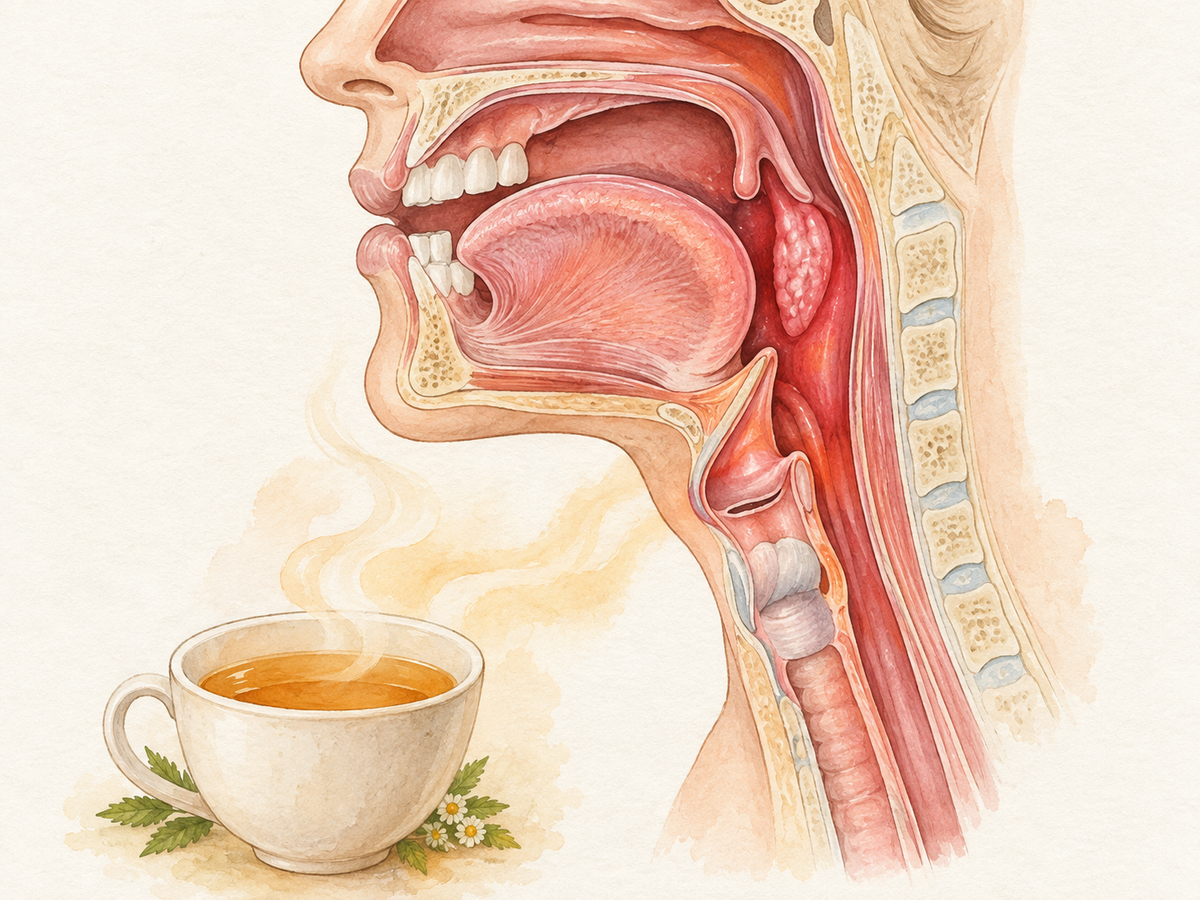
Warm drinks feel good on an irritated throat. They can soothe raw tissues, add moisture to your mouth, and help loosen mucus. Tea also keeps you hydrated, which matters when swallowing hurts and you are not drinking as much as usual.
There is also a comforting ritual in holding a warm cup and sipping slowly. That can help you rest and relax.
But tea is temporary symptom relief. It does not kill the virus or bacteria that may be causing your sore throat. It can help you feel better while your body heals.
Best Overall: Honey-Lemon Tea
Honey-lemon tea is the easiest and most reliable place to start. Warm liquid soothes the throat, while honey provides a protective feel and has been shown to help with cough symptoms. In one study, gargling with honey and lemon water reduced sore throat after surgery more than routine care alone learn more about the honey and lemon sore throat study.
Other research on honey for cough found that honey reduced cough frequency and severity more than placebo in children see the Cochrane review on honey for cough. That does not mean honey cures a sore throat, but it can make symptoms easier to manage.
A simple recipe:
- Brew a mild tea or warm water.
- Let it cool a little.
- Add 1–2 teaspoons of honey.
- Add lemon only if it does not sting.
If lemon stings, skip it. And never give honey to a baby under 1 year old because of the risk of infant botulism.
Best for Pain and Swelling: Ginger Tea
Ginger has anti-inflammatory compounds that may help with swelling and discomfort. It also gives a warming feeling that many people find soothing on a raw throat. A review of plant-based remedies noted that ginger has been used to reduce throat irritation and cold symptoms read the review on ginger and respiratory infections.
To make it, use fresh grated ginger or a good-quality ginger tea bag. Add honey to balance the spicy taste. One caution: very strong ginger can irritate an empty stomach, so have it after food or make it milder.
Best for Coating: Licorice or Marshmallow Root Tea
Licorice root and marshmallow root contain mucilage, which means a soothing gel-like plant compound. It can create a film over the throat that feels protective.
Marshmallow root is the gentler everyday option. Licorice is best only as a short-term choice.
Important cautions:
- Licorice can raise blood pressure and should not be used regularly or in large amounts see the safety overview on licorice.
- Licorice is not safe during pregnancy review licorice pregnancy concerns.
- Marshmallow root may affect how your body absorbs medications, so take it at a different time from other medicines.
Best for Sleep: Chamomile Tea
Chamomile is a mild, calming tea. It may help you settle down when a sore throat is keeping you awake. Sleep matters because rest helps your body heal.
Research on chamomile shows it may improve sleep quality, especially by reducing nighttime awakenings see the chamomile sleep review. One clinical trial also found chamomile tea helped sleep quality in certain groups read the chamomile tea trial.
If you have a ragweed allergy, use chamomile with caution. Chamomile is in the same plant family as ragweed and can trigger an allergic reaction in sensitive people.
Best for Congestion: Peppermint Tea
Peppermint contains menthol, the compound that gives a cooling feeling. It can make your nose feel clearer for a little while, even if it does not physically open the airway see the review on mint and menthol.
Peppermint is a good match when a sore throat comes with a stuffy nose.
But skip it if you have acid reflux or GERD (ongoing acid reflux disease). Menthol can trigger heartburn in some people with reflux learn about menthol and reflux.
Other Good Options: Green, Sage, and Thyme Tea
If you want variety, a few other teas are worth trying.
- Green tea contains antioxidants and a little caffeine.
- Sage tea is a traditional throat soother.
- Thyme tea has been used as a common cough remedy.
These are backup choices, not better than the main options. Use them if you already have them at home and want a change.
How to Brew a Soothing Cup
The way you brew matters as much as the tea you choose.
- Steep the tea for 5–10 minutes.
- Let it cool to warm, not scalding.
- Add honey after it has cooled enough to drink.
- Sip slowly.
Very hot drinks can make an irritated throat feel worse. Warm and comfortable is the goal.
Add-ins and Mistakes to Avoid
Helpful add-ins:
- Honey
- A slice of fresh ginger
- Lemon, only if it does not sting
Things to avoid:
- Alcohol
- Very hot temperatures
- Too much sugar
Sugar can make some people feel worse and does not help your throat.
When to Get Help
Tea can ease discomfort, but it is not treatment for strep throat or other infections. See a healthcare professional if you have any of these red flags:
- Trouble breathing
- Trouble swallowing
- Drooling
- Severe sore throat pain
- High fever
- Symptoms lasting more than a week
- A rash
If swallowing becomes hard or you cannot keep fluids down, get medical care promptly. Do not rely on tea alone.
Bottom Line
Start with honey-lemon tea. It is simple, soothing, and useful for most sore throats. If another symptom bothers you more, match the tea to it: ginger for pain, licorice or marshmallow root for scratchiness, chamomile for sleep, and peppermint for congestion.
Sip slowly, keep fluids up, and rest. If symptoms turn severe or drag on, check in with a healthcare professional.
この記事は、口腔衛生の専門家による正確性の確認を受けています。本記事は一般的な教育情報を目的としており、個別の医学的助言、診断、または治療の代わりとなるものではありません。ご自身の口腔の健康について疑問や懸念がある場合は、歯科医師、医師、またはその他の有資格の医療従事者にご相談ください。