






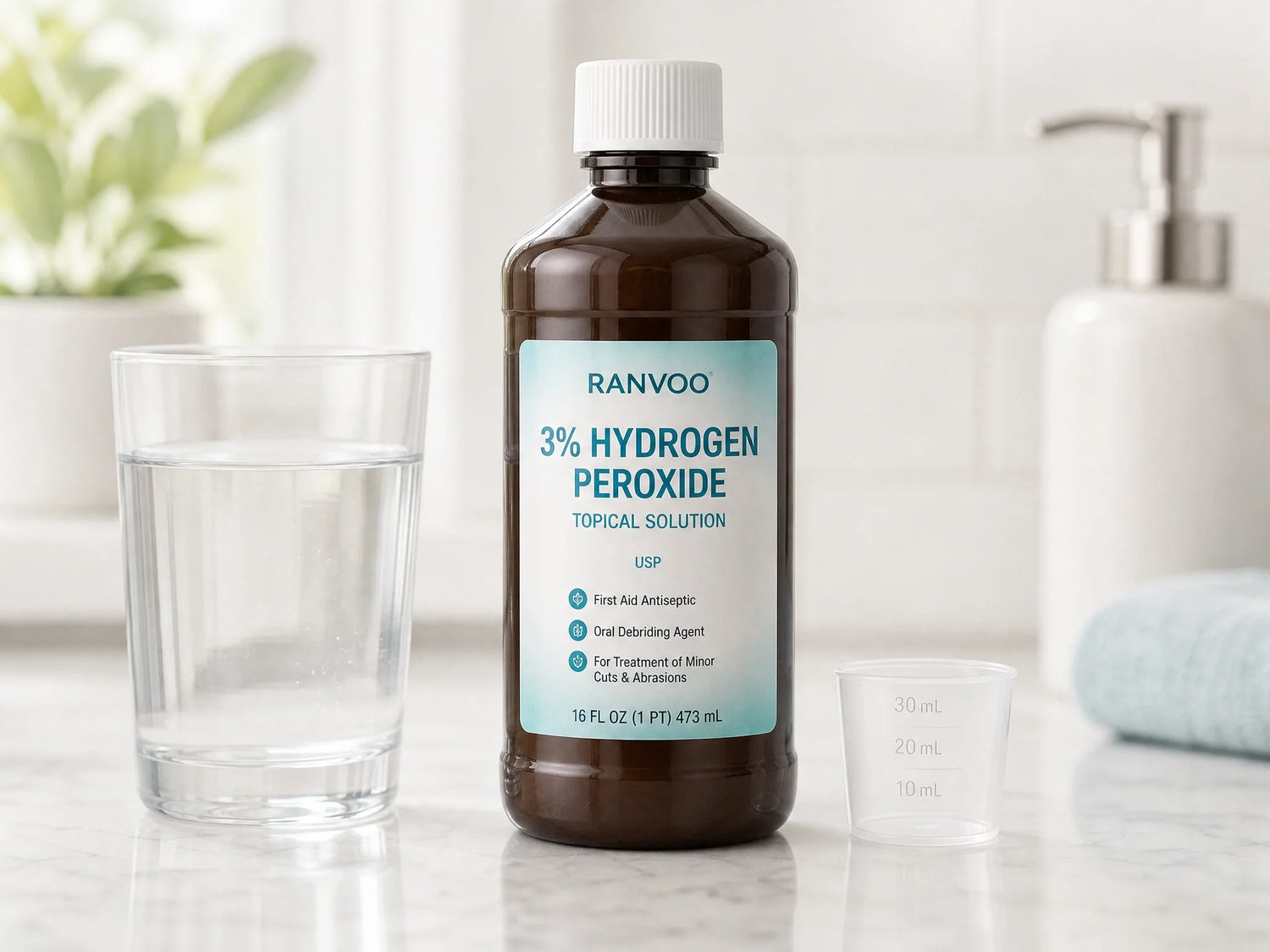
過酸化水素は、適切に希釈すれば安全で効果的な洗口液になり得ますが、誤用すると化学熱傷、エナメル質の損傷、健康への害を引き起こす可能性があります。このガイドでは、正確な混合比、段階的な手順、および重要な安全規則を説明します。
過酸化水素洗口液とは正確には何か?
過酸化水素 (H₂O₂)は、弱い局所消毒剤として作用する無色の化合物です。ほとんどのドラッグストアにある茶色いボトルは通常、 3%濃度—口腔内で使用する前に希釈する必要がある応急処置用溶液です。既製の洗口液ではなく、 消毒剤 であり、洗浄とデブリードマン(壊死組織の除去)のために酸素を放出します。
- 標準的な洗口液:すぐに使用でき、多くの場合フッ化物やエッセンシャルオイルが含まれており、ADAシールが付いている場合もあり、毎日の爽やかさを目的としています。
- 過酸化水素3%溶液:自分で希釈する消毒剤で、通常の過酸化水素にはADAシールはなく、短期間の治療目的でのみ使用します。

科学的に裏付けられた過酸化水素洗口液の利点
過酸化水素は組織に接触すると酸素を放出することで作用します。この酸化作用のバーストが 嫌気性菌の細胞壁を破壊し、いくつかの口腔内の問題に対する有用な短期間の洗口液となります。エビデンスが裏付ける内容は次のとおりです。
喉の痛みを和らげる
希釈した過酸化水素でうがいをすると、喉の細菌数を減らし、軽い感染症の緩和に役立ちます。酸素の放出により、粘りのある粘液がゆるみ、細菌の構造が分解されます。
「過酸化水素は細菌を減らし粘液をゆるめることで喉の痛みを和らげる可能性があります」と、うがい薬に関する臨床ガイダンスは、その抗菌作用を挙げて述べています。 Healthline
口内炎や口腔内潰瘍の治癒
その消毒作用のある発泡作用が 病変を洗浄し、二次感染を防ぎ、回復を早めます。- 希釈したリンスを痛みのある部分に直接すすぎます。- 酸素によるデブリードマンが働くように、少なくとも1分間保持します。- 吐き出します—決して飲み込まないでください。
歯のホワイトニングとステイン除去について
過酸化物には穏やかな 漂白効果 があり、エナメル質の有機ステイン分子を分解します。効果は徐々に現れ、表面の変色にのみ影響します。ただし、過度に使用すると、歯が 半透明 に見え、脱灰を引き起こす可能性があるため、毎日のホワイトニングは推奨されません。 Dentaly.org 長期間の使用はエナメル質を弱めると警告しています。
口臭(歯周病)と歯肉炎と戦うために
殺します 臭いの原因となる細菌 歯茎のラインの下や舌に潜んでいます。これにより、口臭の原因となる硫黄化合物が減少し、軽度の歯肉炎を一時的に改善します。
| 症状 | 過酸化水素の効果 |
|---|---|
| 口臭 | 良好 — 硫黄生成菌を中和します |
| 歯茎の出血 | 中程度 — 細菌の量を減らします |
| 歯垢 | 一時的な減少のみ; 機械的な除去はありません |
| 口内炎 | 良好 — 防腐洗浄が治癒を助けます |
過酸化水素を安全に希釈する方法:黄金比
希釈していない3%過酸化水素をうがい薬として決して使用しないでください。 適切な希釈は、治癒のリンスと化学火傷の間の境界線です。
どの濃度を購入すべきですか?
- 標準の3% USP過酸化水素 (茶色のボトル、「口腔洗浄剤」または「応急処置用消毒薬」と表示されています)。これは家庭での混合に安全な唯一の出発点です。
- 避けてください 食品グレード の過酸化物(10%以上)— 接触すると口腔組織を侵食します。
- 可能であれば、防腐剤不使用または安定剤の最小限の配合を探してください。公式ラベルでは最大0.05%の防腐剤が許可されています。 DailyMed
ステップバイステップの混合手順
- 測定 1オンス(大さじ2杯) 3%過酸化水素を清潔なカップに入れます。
- 加える 冷たい清潔な水1オンス (1:1の比率で、約1.5%溶液になります)。
- やさしくかき混ぜます—振らないでください。光と熱にさらされると過酸化物が分解されるため、すぐに使用してください。

うがいとすすぎの方法:ステップバイステップの手順
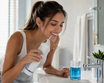
- 混ぜたばかりの溶液を口に含みます。
- 勢いよく 歯と歯茎の周りを少なくとも30秒間すすぎます。
- ゆっくりと頭を後ろに傾けて、 喉の奥で さらに15〜30秒間うがいをします。
- すべて吐き出します。 飲み込まないでください。
- 1日最大4回、食後と就寝前に使用できますが、歯科医または医師の指示がない限り7日を超えて使用しないでください。 DailyMedラベル
誤って少量を超えて飲み込んだ場合, すぐに中毒管理センター(1-800-222-1222)に電話してください。摂取すると胃の不調、嘔吐を引き起こし、大量の場合は血流中に危険な酸素の気泡が発生する可能性があります。
実際のリスクと副作用
誤用すると、簡単な家庭療法が危険になります。歯科医が警告するこれらの懸念事項に注意してください。
過酸化水素は歯を傷つける可能性がありますか?
はい。酸化中に放出されるフリーラジカルはエナメル質を侵食し、 脱灰 を引き起こす可能性があります(毎日または高濃度で使用した場合)。過度に使用した兆候:- 冷たいものへの敏感さの増加- 歯の端が半透明に見える- 白い斑点またはチョークのようなエナメル質
敏感な歯茎やエナメル質の侵食が気になる方は、 RANVOO AirJet X5 電動歯ブラシ のような、より優しい洗浄ツールに切り替えると効果的です。そのバブル洗浄技術は歯と歯茎への圧力を最小限に抑え、刺激の強い研磨や過度のホワイトニングのリスクなしに毎日の口腔衛生を維持する理想的なパートナーとなります。これにより、過酸化水素は短期的な治療補助としてのみ使用し、日常のルーチンは安全で快適に保つことができます。
過酸化水素を飲み込むとどうなる?
薄めた3%溶液を誤って少量でも飲み込むと、吐き気や嘔吐を引き起こす可能性があります。大量に飲み込むと、消化管の火傷のリスクがあり、まれに ガス塞栓症という生命を脅かす状態を引き起こすこともあります。必ず十分に吐き出してください。
一時的な副作用:黒毛舌と口腔カンジダ症
慢性的な酸化作用により、口の中の健康な細菌が死滅し、酵母(カンジダ)が過剰増殖することがあります。これが 口腔カンジダ症を引き起こします。また、舌の乳頭を染色し、無害ではありますが気になる 黒毛舌を引き起こすこともあります。これらは、過酸化物の使用を中止し、バランスを回復すると改善します。 Drugs.com 添付文書

過酸化物うがいを控えるべき場合
以下の場合は使用しないでください: - 口の中に深い傷、重度のやけど、または動物による咬傷がある場合 - 過酸化物にアレルギーがある場合 - 2歳未満の場合(歯科医または医師に相談してください)- 症状が7日間改善しない場合 - 歯科医の指導なしにエナメル質の侵食や重度の歯肉後退の既往歴がある場合
口腔用に適した過酸化物の購入先
任意の薬局またはオンラインの応急処置コーナーで 3% USP過酸化水素 を見つけてください。ラベルに「Oral Debriding Agent」または「First Aid Antiseptic」と記載されている必要があります。追加の安定剤や不明な添加物が含まれる製品は避けてください。ボトルは室温でしっかり閉めて保管し、圧力がかからないように振らないでください。
過酸化水素マウスウォッシュ vs. 市販のマウスウォッシュ
| 特徴 | 希釈した3%過酸化水素 | 市販の過酸化物洗口液(例:Peroxyl) | 標準的な殺菌マウスウォッシュ |
|---|---|---|---|
| 有効成分 | 約1.5% H₂O₂(自己調合) | 1.5% H₂O₂(緩衝済み、そのまま使用可能) | 精油 / クロルヘキシジン / フッ化物 |
| 抗菌スペクトラム | 広域、短期間 | 広域、口腔用に処方されています | 標的を絞った、長持ちする |
| エナメル質の安全性 | 過剰使用のリスク | ラベルの指示どおりに使用すれば安全 | 毎日の使用に安全 |
| 味 | わずかに酸性、発泡する | マイルドなミント、泡が少ない | さまざま |
| ADAシール | なし | 一部の製剤は取得している場合がある | はい(多くの治療用洗口剤) |
| コスト | 非常に低い | 中程度 | 中程度から高い |
通常の過酸化水素リンスはADAシールを取得していませんが、 Peroxylなどの市販の1.5%製品は、口のために特別に緩衝されており、 承認基準を満たす場合があります。推測せずに過酸化水素リンスを使いたい場合は、あらかじめ調整された1.5%溶液がより安全で、歯科医が推奨する選択肢です。
過酸化水素リンスは一時的な緩和のためだけに使用し、毎日のうがい薬としては決して使用しないでください。不明な場合は、歯科医に相談してください。


